

The Great Recycling Myth
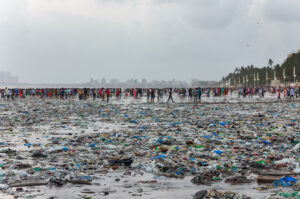
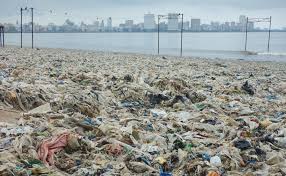
Stop and look around. Right now, within arm’s reach, you’re likely surrounded by plastic. It’s the invisible architecture of modern life—clogging our oceans, choking rivers, and now, settling into the very air we pull into our lungs. We built a world of convenience, and in the process, we built a world we can’t seem to escape

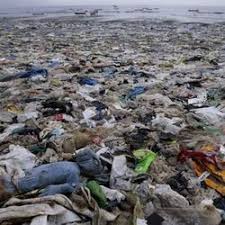

The cruel irony? Plastic is practically immortal. In any case, it will be here long after we are gone!
A single water bottle takes centuries to “break down,” but it never truly leaves. It just fractures into microscopic shards that infiltrate our soil, our water table, and our bloodstreams. We aren’t just polluting the planet; we’re polluting ourselves.
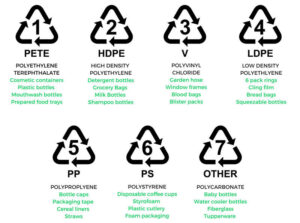
For forty years, we’ve been fed a bedtime story designed to keep us consuming. We’ve all seen that little chasing-arrows triangle on the bottom of a container. It felt like a pact—a quiet assurance that our waste wasn’t an end but a beginning.
But that pact was a lie. Those arrows—the Resin Identification Code—were never a promise of recyclability. They were a corporate sorting tag, a technicality rebranded as a virtue.
It was a masterstroke of marketing. By slapping a symbol of hope on a piece of trash, companies made us feel good about buying more. Today, the bill has come due: less than 5% of plastic is actually recycled. The rest is buried in the dark or burned into the sky.
The Ghost Ship of 1987
In 1987, the world got a glimpse of the future. A barge named the Mobro 4000 set sail from New York with 3,000 tons of garbage. It headed for North Carolina but was turned away. Its attempts to port in Louisiana, Mexico, and Belize all failed miserably
For six months, it wandered the Atlantic like a floating monument to our excess. As the stench grew and the cameras rolled, a terrifying truth emerged: there is no such place as “away.”
When the barge finally slunk back to New York, the trash was incinerated. Problem solved—or so we wanted to believe.
The Illusion of Action
The Mobro should have been a turning point. We should have stopped the flood at the source. Instead, the industry doubled down on the narrative.
The recycling symbol began appearing on everything, including plastics that were physically impossible to process. It was a sedative for the public conscience.
If you believe the bottle in your hand is being reborn as a park bench, you won’t ask why the company is making a billion more of them. Guilt was managed, while production soared.
The Cold, Hard Math
The numbers are devastating. A UN study suggests that only 9% of all plastic ever created has been recycled. That percentage isn’t growing; it’s stagnant or shrinking.
Recycling plastic is a logistical nightmare—it’s filthy, expensive, and degrades the material. Unlike metals, plastic moves to a lower grade with every melt. In a world where virgin plastic is cheaper to make, the “circular economy” is a circle that never actually closes
John Hocevar from Greenpeace called recycling a “toxic lie.” Instead of fixing the system, the industry spends billions on ads to keep us comfortable with a “single-use” lifestyle, while our environment and our health pay the price. The Mobro 4000 showed us what happens when there’s no room left for our waste, yet we keep acting as if that barge is still out there, waiting for a home that will never come.
The system follows the profit, not our good intentions.
The Landfill and the Flame
So where is it? Most of it is just sitting there. Mountains of it in landfills, slowly shedding microplastics into the earth for the next several centuries.
Other portions are burned for “energy recovery.” It’s a fancy term for turning solid waste into toxic air. Even the most environmentally “advanced” nations are essentially using the atmosphere as a dumpster.
Now, the industry touts “chemical recycling.” It sounds like science fiction, and currently, it mostly is. It’s an expensive, energy-guzzling process that serves as the latest delay tactic to keep the factories running.
Shifting the Burden
We’ve been told for decades: “Do your part. Sort your bins. Rinse your yogurt cups.” Individual responsibility is a noble idea, but it’s also a convenient distraction.
While you were carefully washing your plastics, production was exploding. It is projected to triple by 2050.
We are trying to empty a bathtub with a teaspoon while the faucet is turned on full blast. We are being asked to solve a problem we didn’t create and don’t control.
The Way Out
If we want real change, we have to look upstream. We have to stop obsessing over what happens at the trash can and start looking at the factory floor.
The question isn’t “how do we recycle this?” but “why was this made in the first place?” We need to hold the producers accountable for the entire lifecycle of their products.
Real hope doesn’t come from a better sorting bin. It comes from making better decisions before the plastic even exists.
A Final Reality Check
That little triangle was never a guarantee; it was a placebo. It allowed us to keep consuming without the weight of the consequences.
The Mobro 4000 was a siren in 1987. We’ve been ignoring it for nearly forty years. It’s time we finally start listening.
 Author:- Ranjan “Jim” Chadha – a peripatetic mind, forever wandering the digital universe, in search & appreciation of peace, freedom, and happiness. So tune in, and turn on, but don’t drop out just yet!
Really a good read. As always with Jim.
If the technology can be invented to send a man to the moon, surely, the plastic doom can be dealt with in an honourable way so that it doesn’t destroy humanity. There isn’t enough incentive or money in doing so…How can intelligent beings allow a product to be launched in the global market without making the manufacturers accountable for it?
We are not behaving with intelligence and wisdom; we merely have the potential for it.
What’s next with the batteries for the EV industry?
Thanks for the thought provoking article!